Tango
The Bronze · Bronze · International Ballroom
- Time signature
- 2/4 or 4/4
- Tempo — studio
- 30–32 MPM
- Tempo — NDCA
- 30–32 MPM
- Count
- Q Q S
Counted in 2/4 or 4/4 — 2, 4, or 8 beats to the bar. Teaching counts: Q Q S · 1 & 2 · or in 4/4, 1 2 3 (4).
Origin
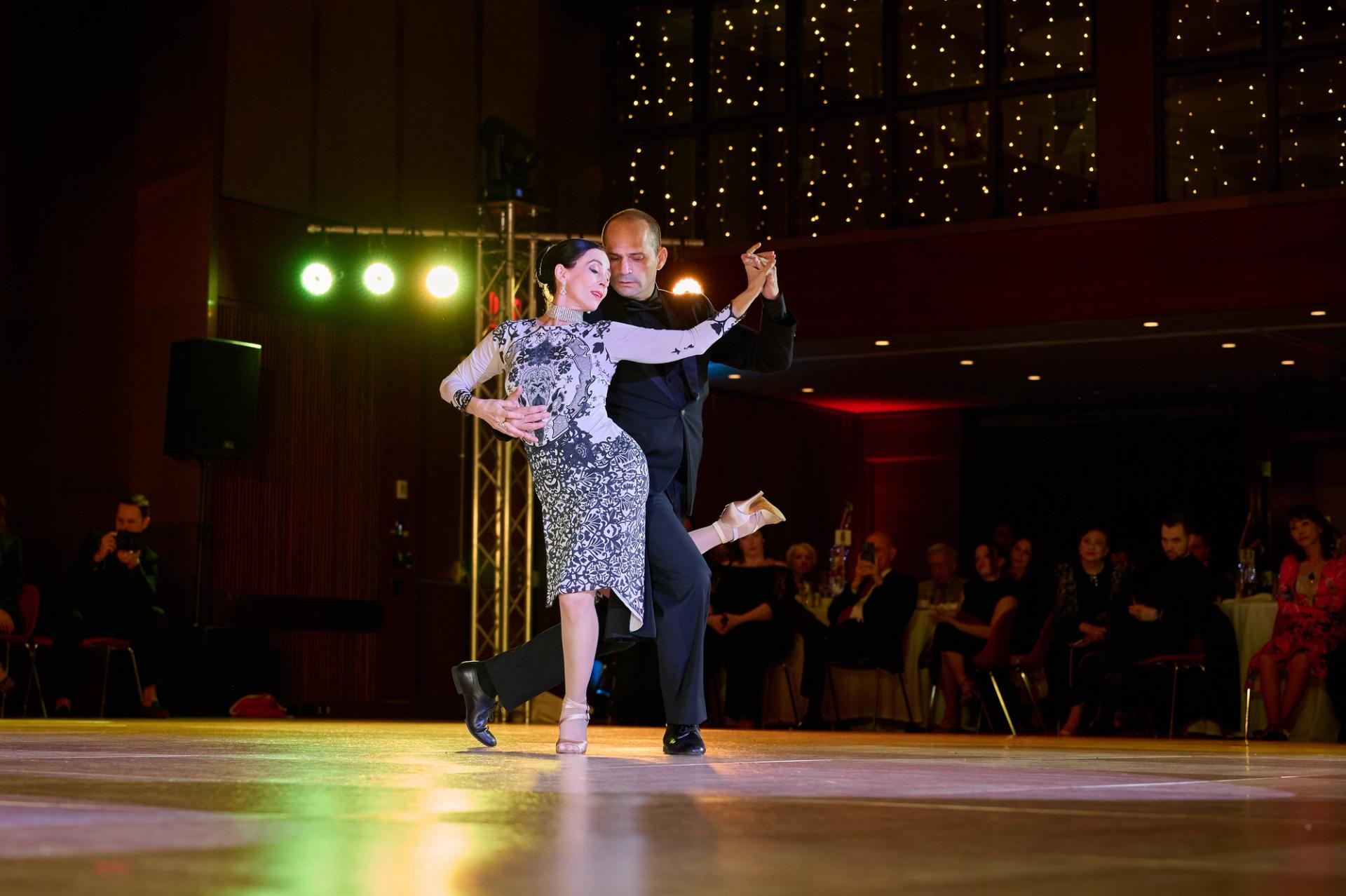
Late-19th-century Buenos Aires and Montevideo — ‘the dance of the immigrants,’ with roots in African Candombe, Cuban Habanera, Polish polka, and German Waltz; transformed in Europe into the staccato, held-frame Ballroom Tango.
Music
2/4 or 4/4 time — marching and insistent.
Character
Dramatic, staccato, and grounded, with a crisp head action.
Figures
- 1
Progressive Link
- 2
Closed Promenade
- 3
Progressive Side Step
- 4
Progressive Side Step Reverse Turn
- 5
Natural Twist Turn
- 6
Natural Rock Turn
- 7
Natural Promenade Turn
- 8
Open Promenade
- 9
Open Reverse Turn (Outside)
- 10
Back Corté
- 11
Left Foot Rock
- 12
Right Foot Rock
- 13
Basic Reverse Turn
- 14
Open Reverse Turn (in line)
Elsewhere in The Bronze
Want to learn the Tango?
Every figure on this page is taught in the studio, one lesson at a time.