Waltz
The Bronze · Bronze · International Ballroom
- Time signature
- 3/4
- Tempo — studio
- 28–30 MPM
- Tempo — NDCA
- 28–30 MPM
- Count
- 1 2 3
Origin
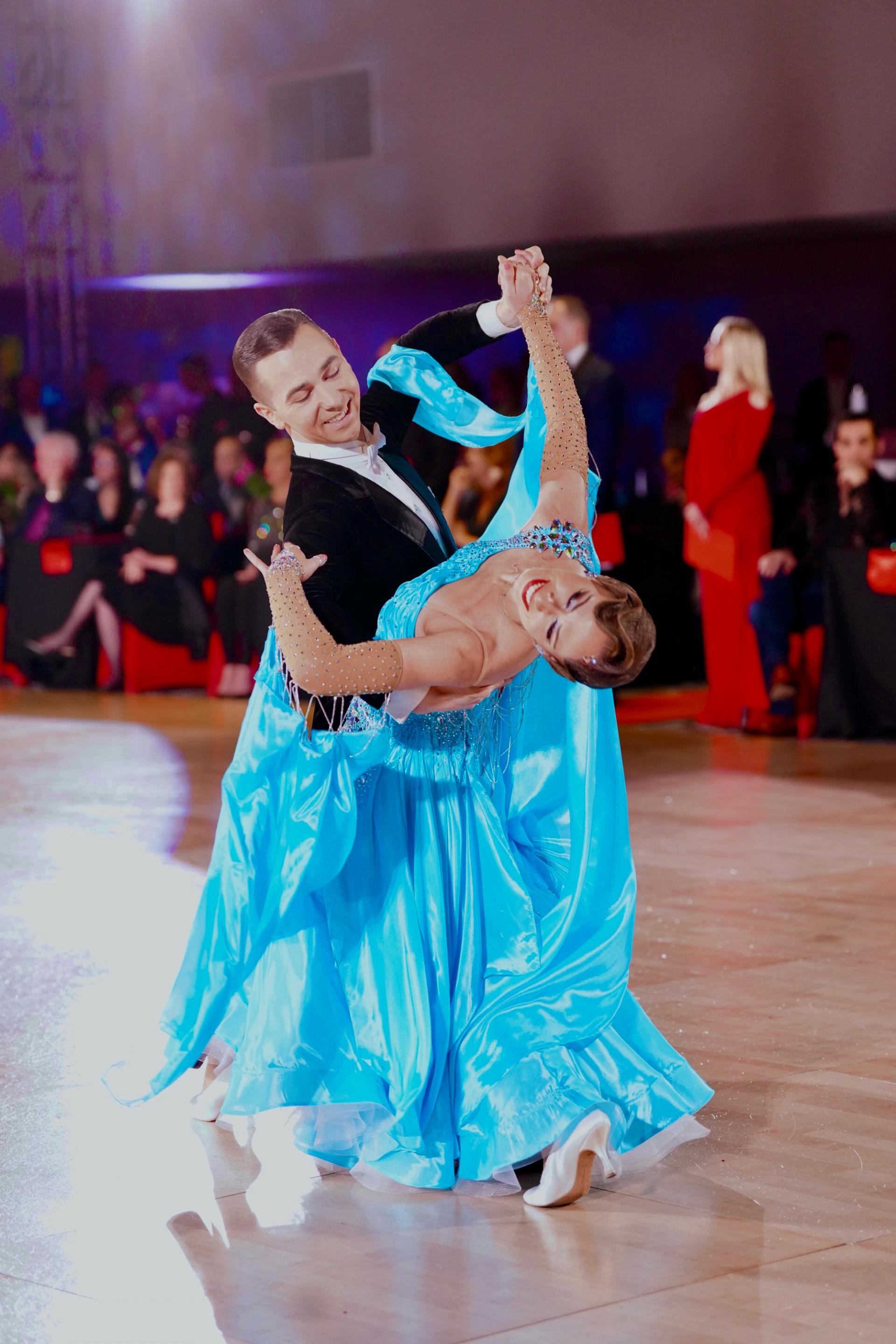
A descendant of the fast Viennese Waltz — slowed in 19th-century America into the Boston, then refined in England into the smooth, rise-and-fall Slow Waltz danced today. The name comes from the German walzen, ‘to roll.’
Music
3/4 time — one strong beat per bar, carried by rise and fall.
Character
Smooth, swinging, and continuous — the foundation of the Ballroom style.
Figures
- 1
Left Foot Closed Change
- 2
Natural Turn
- 3
Right Foot Closed Change
- 4
Reverse Turn
- 5
Whisk (incl. at a corner & Turn Left)
- 6
Chassé from Promenade Position
- 7
Natural Hesitation Change
- 8
Progressive Chassé to Right
- 9
Back Lock
- 10
Closed Impetus
- 11
Reverse Corté
- 12
Back Whisk
- 13
Natural Spin Turn (side & corner)
- 14
Reverse Pivot
- 15
Double Reverse Spin
- 16
Basic Weave
- 17
Outside Change (incl. ending in PP)
Elsewhere in The Bronze
Want to learn the Waltz?
Every figure on this page is taught in the studio, one lesson at a time.