
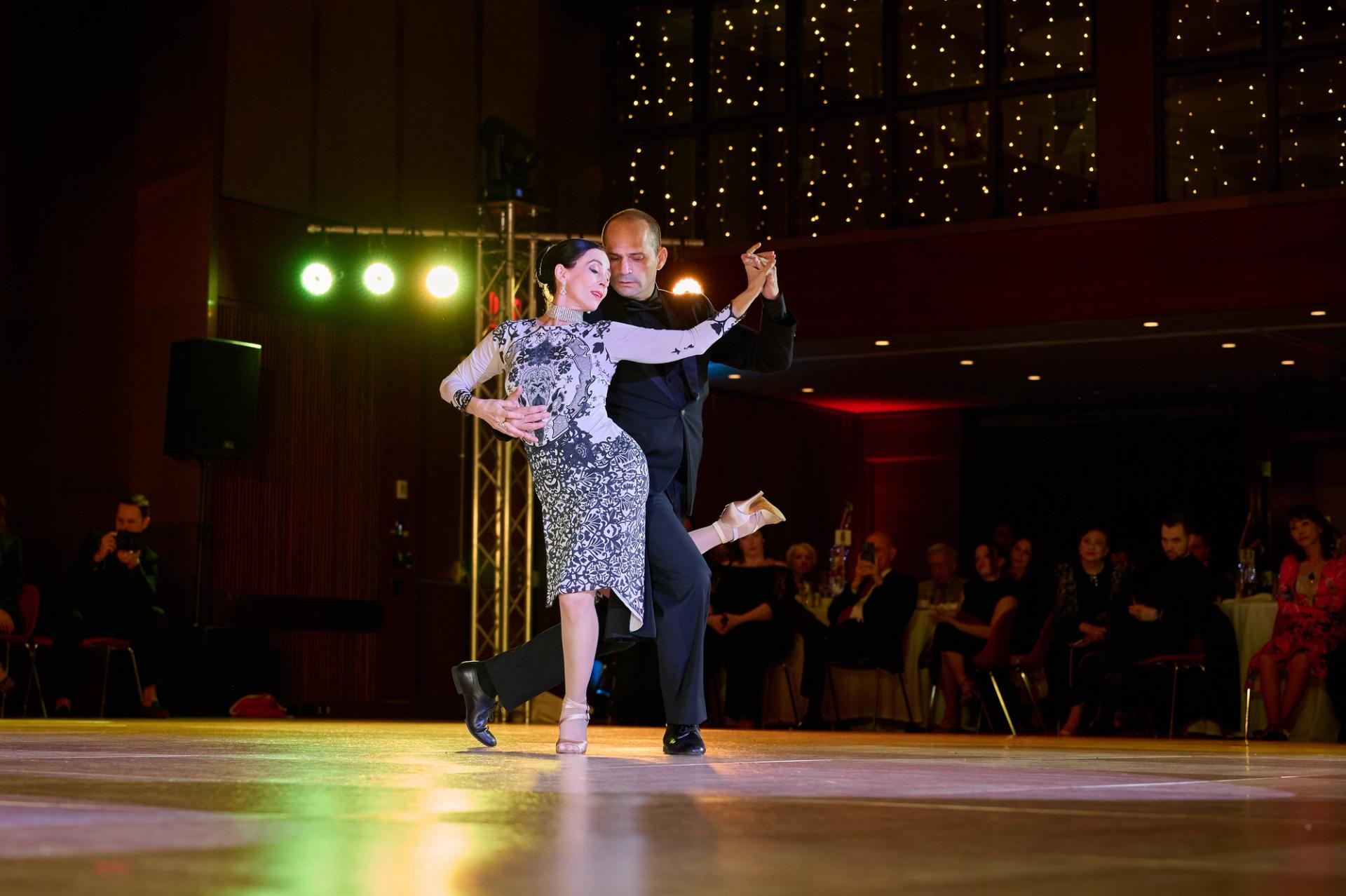
The Tango is a passionate and dramatic dance known for its intricate footwork, expressive movements, and sensuality. It originated in the late 19th century in the working-class neighborhoods of Buenos Aires, Argentina, and Montevideo, Uruguay. Known colloquially as ‘the dance of the immigrants’, the roots of tango lie in several other cultural dances, such as the African Candombe, Cuban Habanera Polish polka, and German Waltz.
Description and Style
- Movement: Tango is characterized by sharp, quick movements and a cat-like walking style. The dance is grounded, with dancers keeping their legs and feet close to the floor.
- Posture: Partners typically maintain a closer embrace compared to other ballroom dances, which can vary from open to very close. This close connection is key to the dance's intimate nature.
- Expression: Tango is not just a dance but an expression of an emotional story. Dancers use their body language and facial expressions to convey the dance's dramatic and passionate nature.
Fun Aspects
- Emotional Expression: One of the most enjoyable aspects of Tango is the ability to express emotions through dance. It allows for a range of expressions from romance to melancholy.
- Physical and Mental Challenge: Tango requires physical skill and mental focus, making it an engaging and rewarding challenge for dancers.
- Social Interaction: Tango communities are known for their welcoming and passionate nature, offering social interaction and cultural immersion.
Music
- Tango music is traditionally played by a small orchestra, featuring instruments like the bandoneón (a type of accordion), Spanish guitar, violin, piano, and double bass. The rhythm is complex and can vary widely, reflecting the dynamic nature of the dance. Contemporary Tango music includes a wide range of musical styles, from traditional Argentine folk to modern and electronic influences.
Venues
- Milongas: These are social dance events specifically for Tango, held in dance halls, clubs, and sometimes outdoor spaces in cities around the world.
- Ballrooms and Dance Studios: In many countries, Tango is a staple in dance studios and ballrooms, often taught alongside other ballroom dances.
- Festivals and Competitions: Tango festivals and competitions are held worldwide, showcasing both amateur and professional dancers.
- Street Performances: In cities like Buenos Aires, Tango is often performed in the streets, reflecting its cultural and historical roots.
The Tango is much more than a dance; it's a cultural icon, known for its emotional depth, technical precision, and the intimate connection between partners. Whether danced in the intimate setting of a milonga or on the competitive stage, Tango offers a deeply expressive and uniquely rewarding experience for dancers of all levels.