
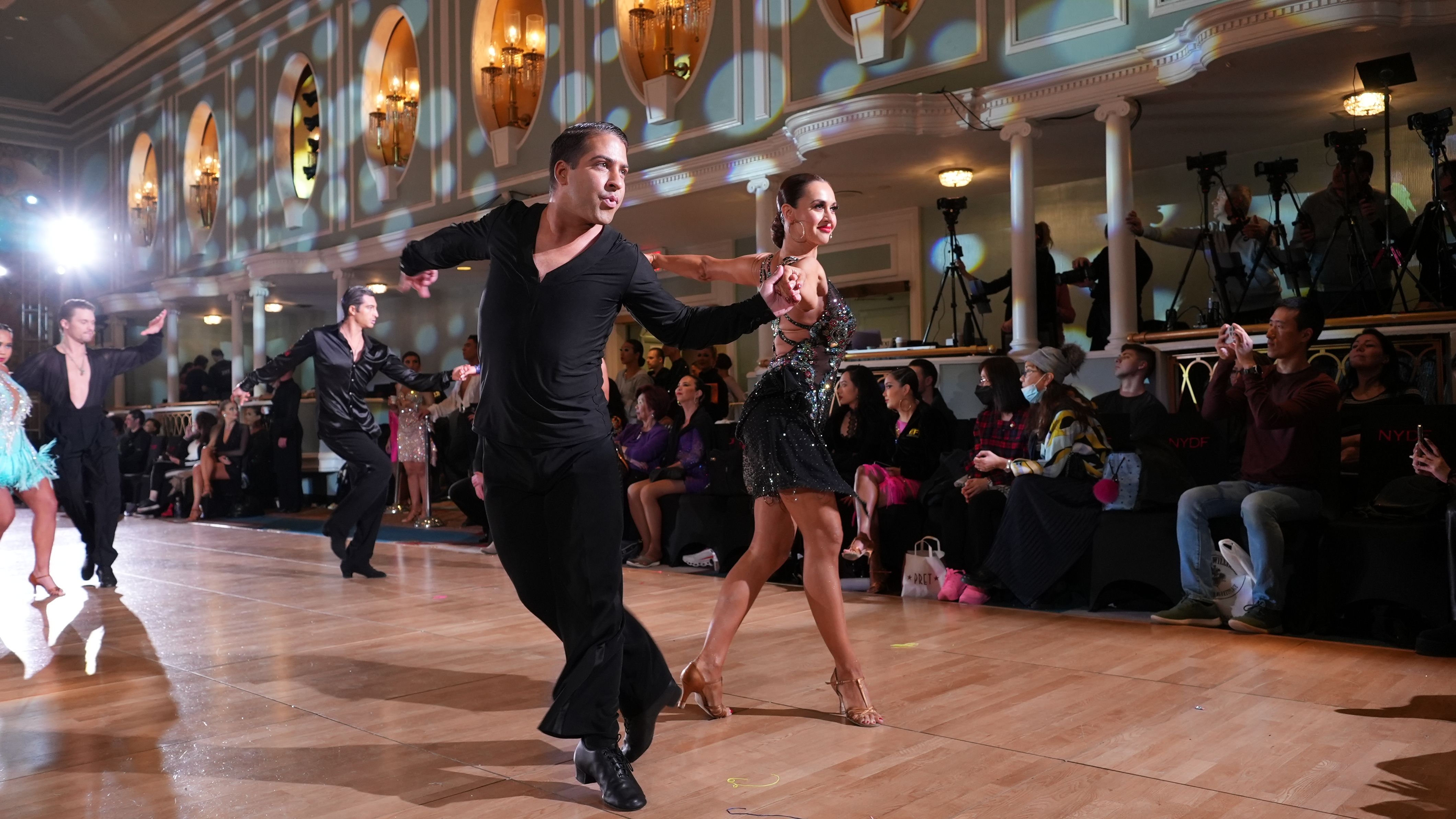
1. What Exactly is Pro-Am?
Pro-Am is the abbreviation for Professional-Amateur dancing. If you've ever watched Dancing with the Stars, you are watching Pro-Am. It pairs you (the amateur student) with a highly trained professional instructor.
At a competition, you walk onto the floor with your teacher and compete against other students who are also dancing with their teachers. The judges only look at you, the amateur. Because your partner is a professional, you are guaranteed to look your absolute best, allowing you to focus entirely on your own frame, footwork, and performance.
2. Finding Your Style: The 4 Categories
Before you start competing in the United States (primarily under the NDCA circuit), you need to choose your weapon. There are 4 major competitive styles:
- International Standard: Elegant and highly structured. Waltz, Tango, Viennese Waltz, Foxtrot, and Quickstep. Partners cannot break hold.
- International Latin: Fast, rhythmic, and highly dynamic leg action. Cha-Cha, Samba, Rumba, Paso Doble, and Jive.
- American Smooth: The "Fred and Ginger" style. Similar to Standard, but couples can break apart for dramatic spins and open lines.
- American Rhythm: The American counterpart to Latin, heavily influenced by authentic social club styles. Cha-Cha, Rumba, Swing, Bolero, and Mambo.
3. The Commitment & The Cost
Competing is an investment in yourself, your fitness, and your artistry. It is significantly more intensive than social dancing.
Training Time: Successful competitors usually train 2 to 4 times a week with their professional partner, supplementing with private solo practice and stamina training (rounds).
Financial Investment: Competitions (commonly called "Comps") involve entry fees per dance (heats), travel, hotel, and covering your professional partner's time and expenses. Wardrobe is another factor—custom competitive gowns and tailored tailsuits are investments of their own. It is a premium sport, akin to equestrian or competitive golf.
The Secret to Winning
Judges are not looking for the most complex choreography. At the Syllabus (Bronze/Silver/Gold) levels, they exist to judge your fundamentals: timing, posture, foot pressure, and connection. A perfectly executed basic step will beat a sloppy advanced routine every single time.
4. Taking the First Step
You don't need to be an expert to start. In fact, there are "Newcomer" divisions explicitly designed for students who have only been dancing for a few weeks! The best way to start is to tell your instructor you have the competitive itch. They will evaluate your timeline, suggest local NYC/Tri-State area competitions, and begin shifting your lessons from social survival to competitive technique.


