
1. The Epidemic of Screen Dependency
In the AI era, our attention spans have been commodified. We spend an average of 7 hours a day staring passively at screens, leading directly to a dramatic rise in anxiety, social isolation, and physical lethargy.
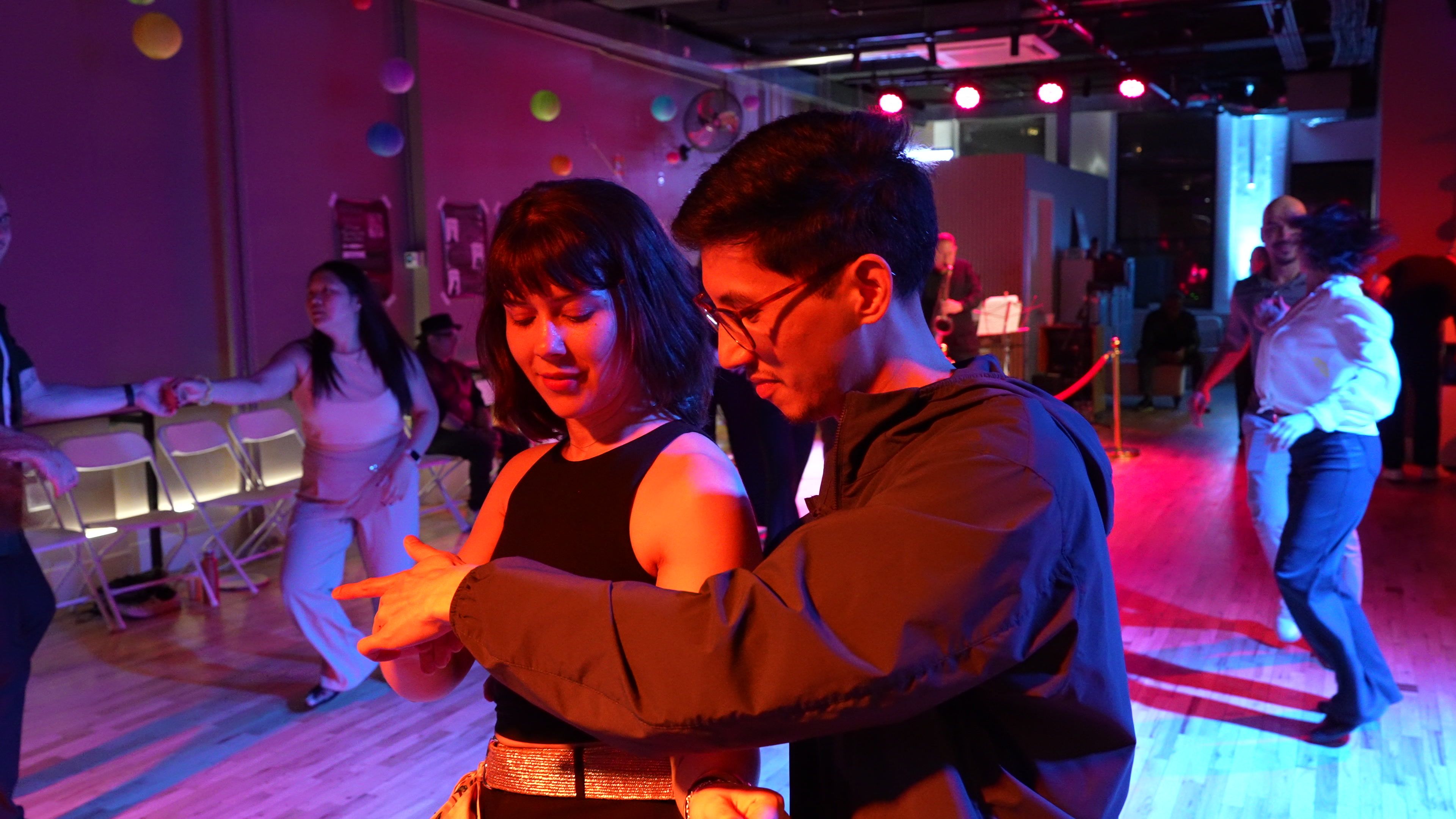
Ballroom dancing offers a radical antidote. It forces you to completely abandon the digital world. For 45 minutes, you cannot look at a phone. You are required to look another human being directly in the eyes and navigate a physical space in real time.
2. Neurological Firewall
Neuroscientists classify social dancing as one of the most complex cognitive tasks a human can perform. When you learn to dance with a partner, your brain must synchronize motor control (footwork), auditory processing (rhythm), spatial awareness (floor craft), and emotional regulation (posture and connection).
3. Real Dopamine vs. Fake Dopamine
A notification on your phone delivers an "empty" dopamine hit—it spikes instantly but leaves you feeling depleted.
Social dancing creates an active reward loop. The biochemical flood of endorphins, oxytocin (the bonding hormone), and dopamine that occurs when you successfully navigate a complex spin with another human being is profound. It provides a biological reward so powerful that it naturally reduces the urge to seek validation from a screen.


